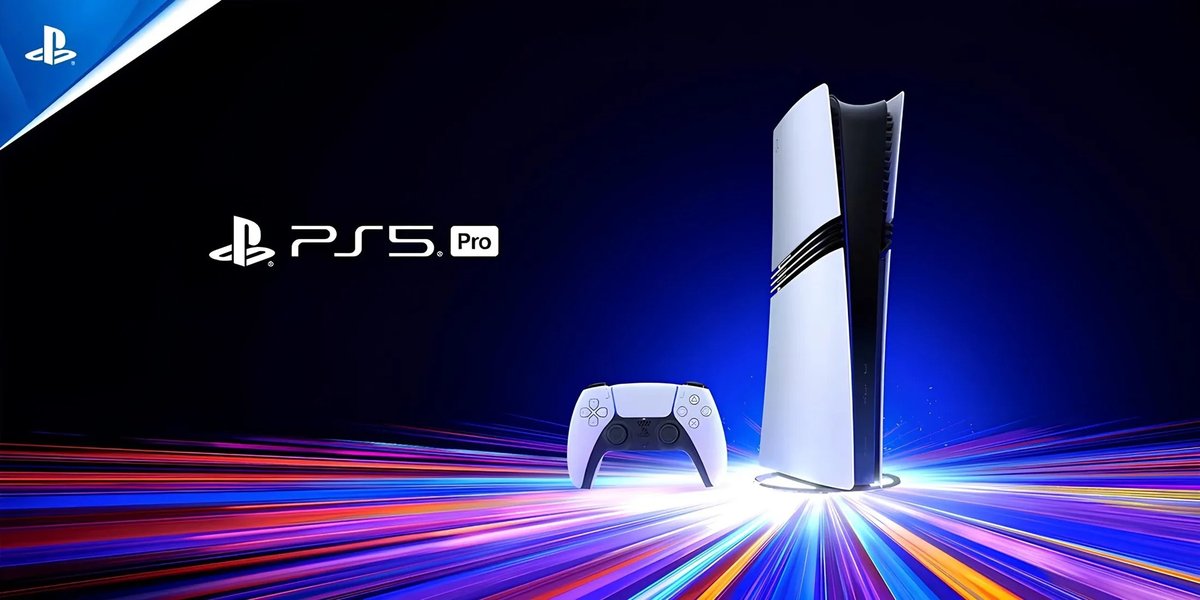
A year has passed since the PlayStation 5 Pro hit the shelves in November 2024, promising a new era of enhanced resolution and smoother frame rates for our favorite games. Positioned as a mid-generation refresh, its mission was clear: to push the boundaries of current gaming visuals and performance, all while subtly hinting at future AI-driven console technology. But after 12 months in the wild, the big question remains – did it deliver on that promise, especially given its premium $699 / £699 price tag?
This super pillar hub article will dive deep into everything you need to know about the PS5 Pro. We'll explore its hardware upgrades, the impact of its key technologies, and most importantly, whether the improved perceived resolution and performance justify the investment for you.
The Core Promise: More Power, Better Experience
At its heart, the PS5 Pro was designed to be more. More graphical horsepower, more memory, and more storage. Sony aimed to deliver a more definitive console experience, especially for those with high-end 4K (or even 8K) displays, bringing titles closer to the visual fidelity and fluidity often associated with PC gaming. The intention was to elevate current and future games, offering tangible benefits that the base PS5 couldn't quite achieve.
However, unlike the PS4 Pro, which had a clearer path to bringing 1080p experiences to 4K, the PS5 Pro's journey has been a little more nuanced. It’s less about a revolutionary leap and more about a significant, though sometimes inconsistent, refinement. If you're eager to fully grasp the technical wizardry under the hood, we recommend you PS5 Pro specs and features Explore for a detailed breakdown.
Unpacking the Hardware Upgrades and Design Evolution
The PS5 Pro boasts some impressive internal upgrades. Its GPU is a significant 62% faster than the base PS5, delivering 16.7 teraflops of graphical power. This translates to a circa 30% rasterization jump, coupled with improved ML acceleration and ray tracing capabilities, allowing for more intricate lighting and visual effects. The console also packs an extra 2GB of DDR5 memory and, perhaps most notably, a spacious 2TB SSD internally, more than double the original's 825GB. Connectivity sees an upgrade to Wi-Fi 7, promising faster and more reliable downloads.
Despite these internal boosts, the CPU remains the same AMD Zen 2 as the standard PS5, meaning CPU-bound games won't see dramatic performance gains. Design-wise, the Pro is a sleek machine with a matte finish, roughly the same size as the original but feeling more svelte due to its default disc-drive-less nature. An optional disc drive can be purchased separately for those who prefer physical media. While a horizontal stand is included, a vertical stand is an extra purchase. Critically, the console maintains a remarkably quiet operation even during intense gaming sessions.
PSSR: Sony's AI Upscaling – A Double-Edged Sword
One of the PS5 Pro's most touted innovations is PlayStation Spectral Super Resolution (PSSR), Sony's proprietary AI upscaling technology. The promise of PSSR is grand: to enable supported games to run at higher resolutions and frame rates, potentially hitting that elusive 4K 60fps sweet spot with ease.
In its best implementations, PSSR works wonders, delivering sharper images and smoother gameplay. However, its real-world application has been mixed. In some titles, especially those with complex global illumination or ray tracing, PSSR can sometimes detract from the visual quality, making things look worse rather than better. The biggest frustration for users has been the lack of a system-level option to disable PSSR, leaving players stuck with a less-than-ideal implementation if a game's patch isn't stellar. Developers have even, in some cases, abandoned Pro patches due to these challenges.
Real-World Gaming Performance: From Glorious to Grumbles
The true measure of any console lies in how games perform, and the PS5 Pro is no exception. After a year, the performance uplift is evident in many titles, but it’s not a universally game-changing experience. Certain games truly shine, while others offer only minor improvements or, in unfortunate cases, exhibit issues.
The PS5 Pro at its Best: Games that Truly Shine
Many developers have leveraged the PS5 Pro's power to deliver noticeably enhanced experiences. These are the titles where the console truly justifies its existence:
- Assassin's Creed Shadows: Finally enables ray tracing at a fluid 60 frames per second, a significant jump from the base PS5's 30/40fps.
- Final Fantasy 7 Rebirth: Addresses the base PS5's blurry performance mode and sluggish quality mode, offering a much-needed polish.
- Control: Ultimate Edition: A landmark title that finally received crucial ray tracing support on consoles.
- Ghost of Yōtei: Features exclusive ray tracing support and maintains impressively steady performance.
- Marvel’s Spider-Man 2: Offers both a sharp Fidelity Pro mode with ray tracing and a stable 60fps Performance Pro mode via PSSR.
- The Last of Us Part 1 and Part 2: Pro mode uses PSSR for a crisp 4K 60fps experience with a clear upgrade in detail.
- F1 2024: Pushes the boundaries with an 8K mode (on supported TVs) and a 4K 120Hz mode for ultimate speed.
These titles represent the pinnacle of what the PS5 Pro can achieve, making a strong case for its visual and performance enhancements. To discover more titles that truly benefit from the Pro's horsepower, you'll want to check out our dedicated guide on Games Best Suited for PS5.
Middle-of-the-Road: Expectation vs. Reality
Not every game has been a home run. Some titles, even first-party ones, have shown little ambition in optimizing for the Pro, leading to underwhelming results.
- Astro Bot & Doom: The Dark Ages: Many expected more from these first-party exclusives, showing limited optimization for the Pro.
- Metal Gear Solid Delta: While patches improved frame rates, dips into the mid-30s during intense AI encounters highlight the PS5 Pro's limited CPU boost.
- Call of Duty Black Ops 6: Successfully implemented anti-lag modes but struggled with PSSR artifacts like speckling at launch.
- CPU-limited titles: Games like Warhammer 40K: Space Marine 2 and Borderlands 4, built on Unreal Engine 5, often experience frame rate dips below 60fps when the CPU is bottlenecked by many on-screen enemies.
- PS4 Enhancement Mode: While an "enhanced option" exists for PS4 titles, discerning noticeable improvements has often proven difficult.
When PSSR Fails: Detrimental Implementations
Perhaps the most frustrating aspect of the PS5 Pro's first year has been instances where PSSR, or other Pro-specific optimizations, actively worsened the experience.
- Dragon's Dogma 2: Suffered notable issues with ambient occlusion or ray tracing modes, leading to a less polished look.
- Silent Hill 2 Remake & Silent Hill f: Implied similar issues, causing concern for fans.
In these cases, without a system-level option to disable problematic patches, users were stuck with a poorer visual experience, leading some developers to even abandon their PS5 Pro versions.
Who is the PS5 Pro Really For?
Given the mixed bag of performance and its premium price, it's crucial to identify the ideal candidate for a PS5 Pro. This isn't a console for everyone. The PS5 Pro is primarily for:
- 4K (or 8K) TV Owners: If you own a high-end display and crave the absolute best possible visual fidelity and smoothest frame rates your money can buy on a console, the Pro is built for you.
- Performance Enthusiasts: Gamers who prioritize 60fps (or higher) in every possible scenario and appreciate enhanced graphical settings like ray tracing will find the Pro's upgrades most appealing.
- Early Adopters & Tech Savvy Players: If you enjoy being at the forefront of console technology and are willing to pay a premium for incremental improvements, the Pro offers that cutting-edge edge.
- Those Upgrading from PS4: If you're coming from an older console generation and want the most powerful PlayStation experience available, bypassing the standard PS5 might be a consideration.
If you don't fit these descriptions, or if your budget is a primary concern, the standard PS5 still offers an excellent gaming experience. For a deep dive into whether you belong to the target demographic, read our detailed guide on Who is the PS5 Pro for.
Is the Price Justified? A Value Analysis
The $699 / £699 price tag makes the PS5 Pro the most expensive PlayStation console to date. This is a significant investment, and whether it's justified boils down to individual priorities and expectations. For those who can truly appreciate and utilize the enhancements – the sharper textures, the smoother frame rates in demanding titles, the improved ray tracing – the value proposition is stronger. The included 2TB SSD is a welcome upgrade, reducing the immediate need for storage expansion, and the Wi-Fi 7 is a nice quality-of-life improvement.
However, for casual gamers or those still on 1080p displays, the benefits may not be substantial enough to warrant the extra cost over the standard PS5. The fact that an optional disc drive costs an additional $79 / £99 further adds to the overall investment for physical game collectors. It's a premium product designed for a premium experience, but that experience isn't always guaranteed across the entire game library. To help you weigh the financial decision, our detailed breakdown on Is the PS5 Pro justified? PS5 offers a complete value analysis.
PS5 Pro vs. Standard PS5: Head-to-Head
So, how does the Pro truly stack up against its sibling? The standard PS5 is still an incredibly capable console, delivering stunning visuals and smooth performance in its own right. The Pro's advantages lie in pushing those boundaries further: higher base resolutions, more consistent frame rates, and the ability to enable more demanding graphical features like ray tracing in titles where the base console compromises. The 2TB SSD and Wi-Fi 7 are also distinct advantages for the Pro.
Ultimately, choosing between the two comes down to your budget and your desire for the absolute best. If you're happy with excellent performance and visuals, the standard PS5 remains a fantastic choice. If you demand that extra polish, that slight edge in fidelity, and those more stable frame rates, the Pro steps up. For a complete side-by-side comparison of every feature, specification, and performance metric, our in-depth guide will help you Compare PS5 Pro and Standard.
The Future Is Bright: Looking Ahead to 2026
While the PS5 Pro's first year has offered a taste of its potential, often with mixed results regarding PSSR implementation, the future looks more promising. Many anticipate 2026 to be the console's breakout year. With highly anticipated console exclusives like Marvel's Wolverine, Grand Theft Auto 6, and even PlayStation's first "Halo title" on the horizon, these future blockbusters are expected to be built from the ground up to leverage the PS5 Pro's full capabilities.
As developers gain more experience with its unique hardware and AI upscaling technologies, we can expect more consistent and impressive optimizations. The PS5 Pro has laid the groundwork for a more premium console gaming experience, and its true impact may still be unfolding as the industry evolves.